Walk into any colour bar and you will find two camps. Stylists who reach for permanent colour out of habit, and stylists who have learnt to read the brief and choose the right system for the result. The difference is rarely about preference. It is about understanding what each chemistry actually does to the hair fibre, and where each one belongs in a modern service menu.
If you are still defaulting to permanent for every chair, this is the article for you. We will compare the two systems honestly — not to dismiss permanent colour, which still has its place, but to show why demi-permanent has quietly become the workhorse of the most profitable colour menus in Europe.
The Chemistry, Without the Mystery
The fundamental difference between demi-permanent and permanent colour is what happens inside the cortex.
Permanent colour uses ammonia (or a strong alkaline equivalent) to swell the cuticle, allowing pigment precursors and a high-strength developer (typically 6 vol, 9 vol, or 12 vol) to penetrate deeply. Once inside, those precursors oxidise and lock together into large molecules that cannot wash out. The trade-off is structural: every permanent service costs the hair some integrity, because the cuticle has to be lifted and natural pigment is partially destroyed.
Demi-permanent colour works differently. It uses a low-volume developer — typically 2.7 vol or below — and relies on a gentle alkaline agent rather than ammonia. The cuticle opens just enough to let small dye molecules deposit on and slightly within the cortex. There is no significant lift of natural colour, and there is no aggressive oxidation of the hair's own structure. Pigment fades gradually over 20 to 28 shampoos rather than disappearing at a regrowth line.
Important nuance: demi-permanent is not the same as semi-permanent. Semi sits on the surface of the cuticle and washes out in 6 to 8 shampoos. Demi enters the cortex, just gently, and lasts roughly four times longer.
Lift, Coverage, and What Each System Can Actually Do
Permanent colour can lift natural hair up to four levels and deposit at the same time. That is a powerful tool, but it is also a destructive one. Once you have used it, you cannot un-use it — the pigment is in the hair until that section is cut off.
Demi-permanent colour does not lift. It deposits tone at the same level as the natural or existing base, or one shade darker. This sounds limiting until you realise that the vast majority of salon colour services do not actually require lift. Refreshes, gloss services, tonal corrections, grey blending on resistant or non-resistant hair, post-lightening toning, and brunette enrichment all sit comfortably inside what demi can do.
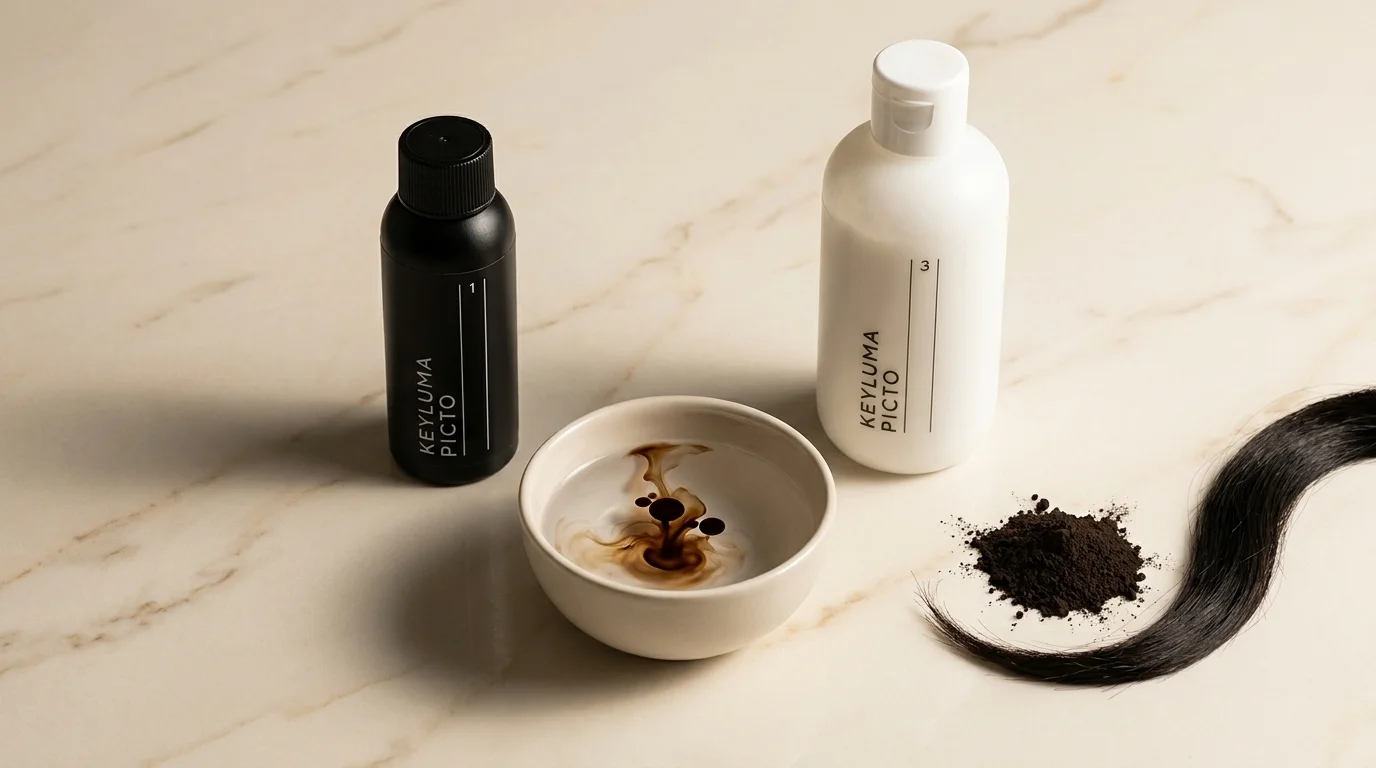
For grey, the picture is more nuanced than the old rule of "you need permanent for white hair". A well-formulated demi-permanent system can cover up to 100% white hair with the right tonal recipe, depending on the brand. KEYLUMA PICTO, for example, achieves full coverage on resistant grey when used at a 1:1.2 mixing ratio with cream activator, because the pigment load is calibrated for it.
Hair Integrity Over Time
This is where the conversation gets honest. A client who comes in every six weeks for permanent root touch-ups for ten years will, by the end of that decade, have hair that has been chemically processed roughly 87 times. Even with the best after-care, the cumulative effect on cuticle integrity, porosity, and elasticity is significant.
The same client maintained on a demi-permanent system — with permanent reserved only for true grey-coverage commitments or genuine lift services — will, over the same period, have hair that feels noticeably different in your hands. Less porosity drift. More predictable take. Better gloss off the basin without needing to layer in heavy bond builders.
This is not a marketing claim. It is a structural reality of how the two chemistries interact with the cortex.
When Permanent Still Wins
To be clear: there are services where permanent is the right tool.
- True lift services that need three or more levels of lightening with deposit in one step
- Heavy grey coverage on a client who has historically rejected anything but permanent and trusts the result
- High-fashion fantasy work that demands aggressive base shifting
- Final-step colour corrections where deep, locked pigment is essential
If a service genuinely requires those outcomes, reach for permanent. The mistake is reaching for it by default.
When Demi-Permanent Wins
This is where the modern colour menu lives.
- Refresh services — pulling tone back through faded mid-lengths and ends without overlapping permanent on already-coloured hair
- Glossing — the fastest-growing add-on category in salons globally, and a service that demi was built for
- Toning after lightening — neutralising warmth on a balayage or highlights without the harshness of acidic permanent toners
- Grey blending — softening grey rather than flatly covering it, particularly on clients in transition
- Brunette enhancement — adding richness, depth, or cool tone without changing the level
- Men's colour — natural-looking results that grow out softly without a stark regrowth line
- First-time colour clients — a low-commitment entry point that fades gracefully if they decide it is not for them
The Business Case
Beyond the chemistry, there is a commercial argument worth making. Demi-permanent services are typically faster to apply, have higher margin (smaller mix ratios, less tube used per service), and create a stronger rebooking pattern because clients return more often for refreshes that take 30 to 45 minutes rather than 2.5 hours for a full permanent root and ends.
Salons that have built their menu around a high-quality demi-permanent system tend to report higher utilisation, fewer chemical complaints, and a stronger client relationship with the brand of colour itself — because clients can feel the difference in their hair.
Choosing a Demi-Permanent System
If you are evaluating a demi-permanent line, the criteria worth checking are:
- Genuinely ammonia-free — and ideally PPD-free, which removes the most common allergen in professional colour
- Neutral pH — the closer to the hair's natural pH, the less stress on the cuticle
- A complete shade palette — at minimum a full level range with cool, warm, and neutral tonal families plus intensifiers, so you can build any tone you need
- A cream-based activator — cream activators give you better control over consistency and stay where you place them
- Made by a manufacturer that specialises in colour chemistry — not a generic private label
KEYLUMA PICTO was developed in Italy specifically to meet these criteria — 30 shades across 9 levels, ammonia-free and PPD-free, neutral pH, mixed 1:1.2 to 1:1.5 with our cream activator, designed as a complete demi-permanent system rather than an add-on to a permanent line.
The Honest Conclusion
Permanent colour is a sharp tool. Demi-permanent is a more refined one. The best colourists know how to reach for the right tool for the job, rather than treating every service as a nail that needs the same hammer.
If you have built your career around permanent colour, you have not been wrong. But the conversation in professional colour has moved on. Clients want gentler results, healthier hair, and services that fit into a busy life. Modern demi-permanent systems deliver all three, and they do it without asking your client's hair to pay for the result.
The question is not really demi versus permanent. The question is: are you choosing the system, or is the system choosing you?
Back to Blog